
News
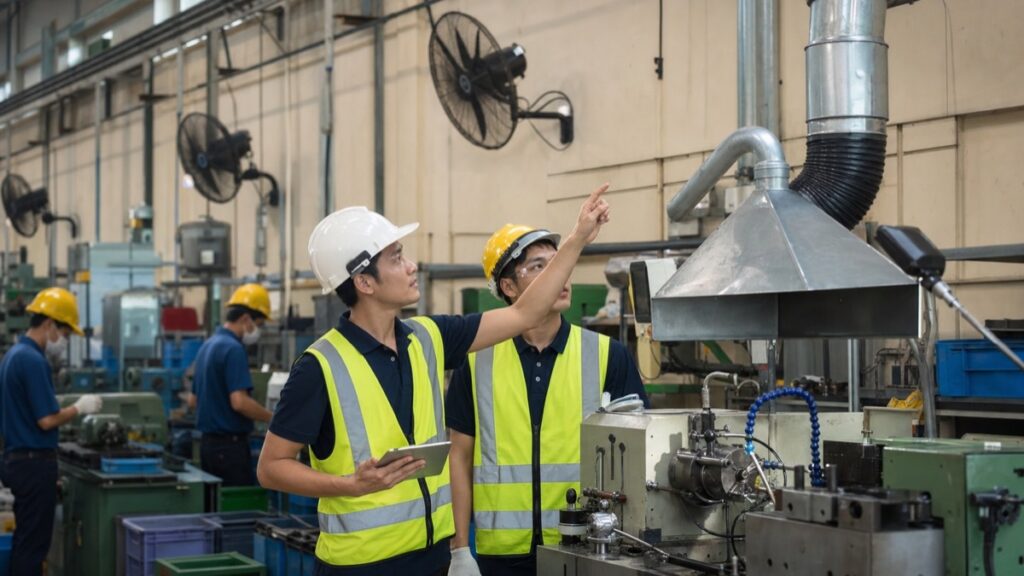
POPULA local exhaust fan demand is increasing in Southeast Asian manufacturing workshops as more factories look for targeted ventilation around machines, hoods, and process points. Instead of relying only on general wall exhaust, project teams are paying closer attention to where heat, odor, moisture, or light process fumes are generated inside the workshop.
This trend is visible in light manufacturing sites across Vietnam, Thailand, Malaysia, Indonesia, and the Philippines. Many workshops operate with mixed production zones, including machinery areas, packing tables, inspection stations, and material storage. When one process point creates warm or contaminated air, a general ventilation fan may not remove it fast enough before it spreads.
For these applications, POPULA helps factories evaluate whether the site needs local exhaust, direct air supply, or a combined airflow layout. The goal is to move air from the problem source first, then support the wider workshop with stable air exchange.
Why POPULA local exhaust fan demand is growing in manufacturing workshops
In many workshops, the ventilation problem is not evenly distributed. One machine may release heat, another station may need local odor removal, and a nearby worker area may need more comfortable airflow. If all of these issues are treated with only one large exhaust point, airflow can become uneven and inefficient.
Local exhaust planning focuses on the source. Exhaust hoods, ducted suction points, or machine-side collection points can help remove warm or unwanted air before it moves across the whole workshop. This is especially useful in plastic processing, food packaging, light metalworking, electronics support areas, and machinery cooling applications.
As production lines become more compact, factories are also trying to avoid unnecessary airflow disturbance. A targeted exhaust layout can keep air moving where it is needed without creating strong random wind across packaging, inspection, or precision work areas.
Common problems that require local exhaust planning
Factories usually start considering local exhaust fans when several site problems appear together:
- Heat or odor remains around a specific machine or process point
- General wall exhaust does not reach the problem area effectively
- Workers need better air quality near operating positions
- Ductwork, hoods, or elbows create resistance that simple fans cannot handle
- The workshop needs airflow control without disturbing nearby packing or inspection zones
These issues are different from broad workshop ventilation. They require fan selection based on pressure, duct route, air collection position, and whether the goal is exhaust, cooling, or directional air supply.
How POPULA fan selection supports local exhaust applications
For duct-connected source exhaust, the DF series multi-wing centrifugal fan can be considered when air needs to move through hoods, short ducts, or localized collection points. It is suitable for situations where the exhaust path has more resistance than simple open wall ventilation.
For higher-pressure process ventilation, 9-19 high pressure centrifugal fans can support applications where the system includes longer duct routes, elbows, or higher resistance. This type of fan is often considered when a project requires stronger pressure performance for source exhaust or process airflow.
For direct air movement near workers or equipment, EG axial fans can support point-based air supply where the airflow path is more direct. In some workshops, axial fans are used together with exhaust fans so workers receive better airflow while unwanted air is removed from the process area.
The important step is to define the airflow task before choosing a model. POPULA recommends checking the machine location, hood size, duct length, discharge path, worker position, and surrounding production zones before deciding between axial fans and centrifugal fans.
Targeted ventilation is becoming part of workshop upgrades
As Southeast Asian factories upgrade older workshops and add new production lines, targeted ventilation is becoming more common. Instead of adding fans only after workers report discomfort, project teams are starting to include local exhaust points during layout planning.
This approach can make ventilation easier to manage. It helps remove warm or unwanted air closer to the source, reduces airflow conflict between different workshop zones, and supports a cleaner working environment around key machines.
For manufacturing workshops that need source exhaust, machine cooling, or directional airflow, POPULA can provide fan selection support based on site resistance, installation position, operating schedule, and airflow path. POPULA fan solutions can be adapted for local exhaust, ducted ventilation, and combined workshop airflow systems.