Solutions
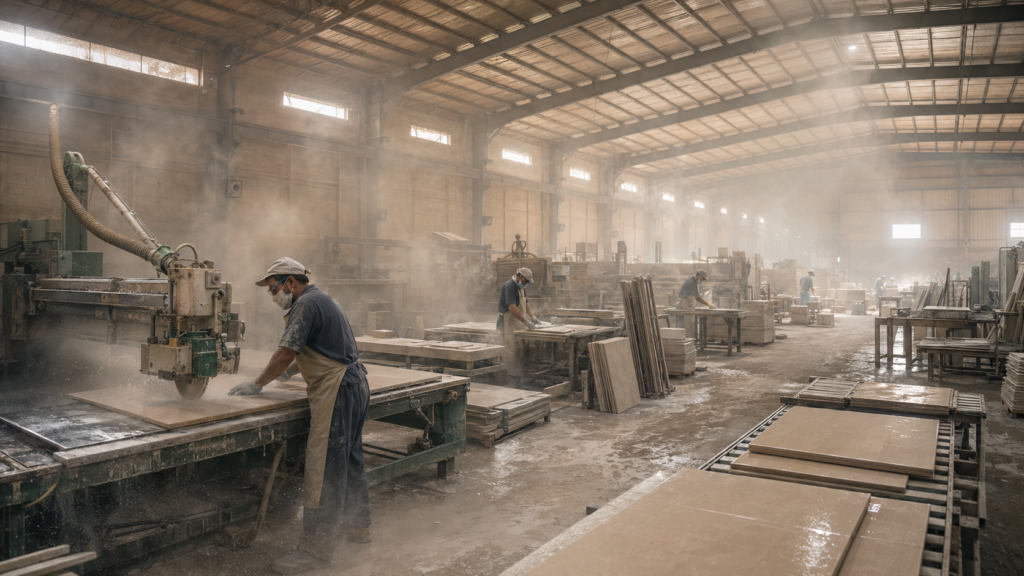
A ceramic tile cutting and polishing workshop in Jeddah needed to control mineral dust at the source while reducing heat and suspended residue at roof level. POPULA developed a three-level approach built around local ducted extraction, roof-level exhaust, and controlled air movement for the inspection area. This POPULA Jeddah ceramic tile workshop dust extraction solution is designed around the actual airflow path—from cutting and polishing stations to the high-ceiling work zone and finished-product inspection area.
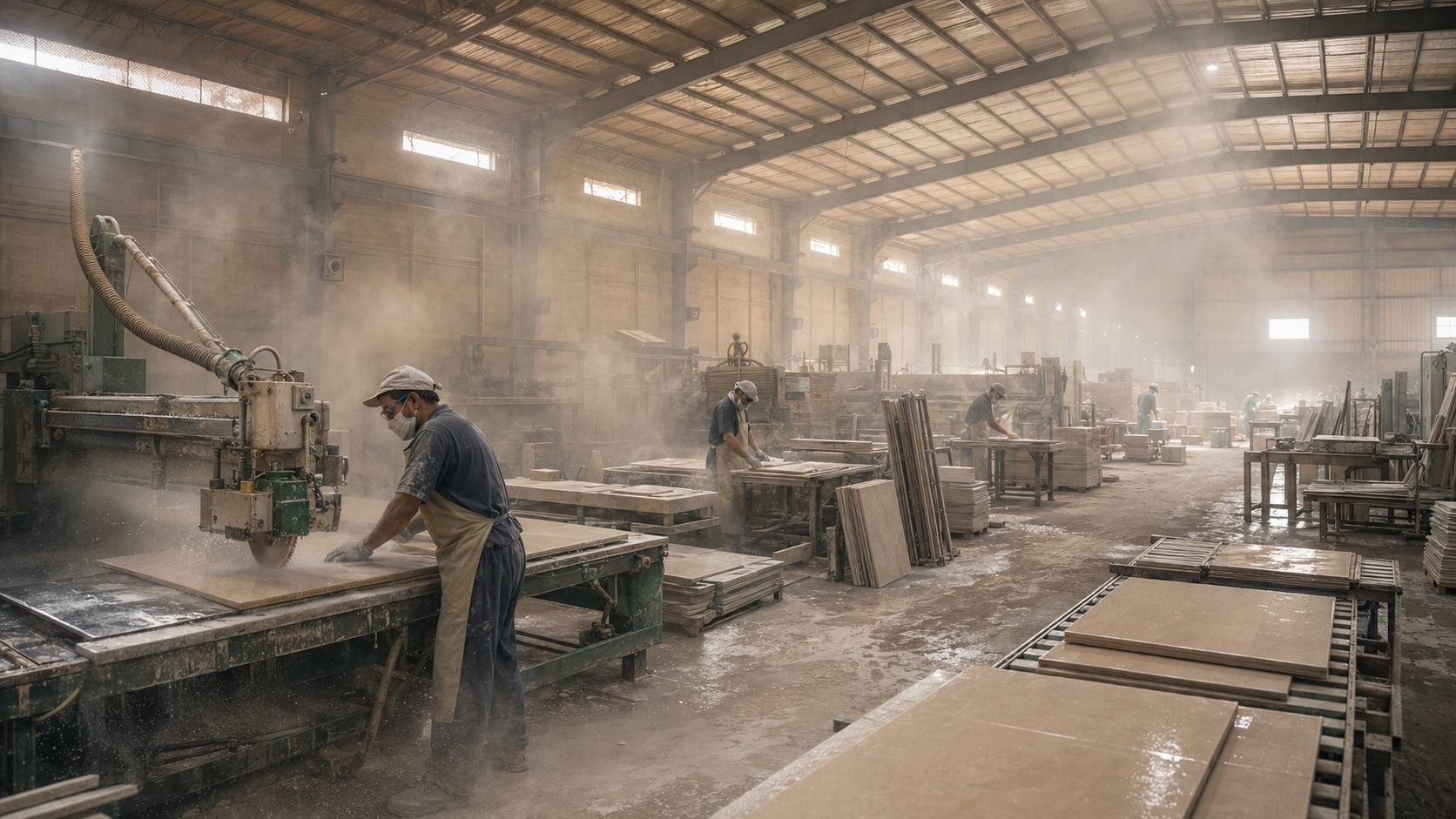
POPULA Jeddah Ceramic Tile Workshop Dust Extraction Solution for Cutting and Polishing Areas
Tile cutting, edge finishing, and dry polishing can release fine mineral dust close to the machine. General wall ventilation alone may move some heat, but it does not reliably capture dust before it spreads through the workshop. In this project scenario, the first priority is to place collection hoods close to the cutting and polishing points and move the collected air through a dedicated duct route.
The workshop also needs a separate high-level strategy. Heat and fine suspended residue can accumulate beneath a high roof, while the finished-tile inspection and packing zone needs cleaner, more comfortable local airflow for personnel.
Why the C6-46, DWT-I, and Axial Air-Supply Combination Was Selected
For the source-extraction layer, the selected starting point is the C6-46 centrifugal fan for extraction dust. Its dust-extraction application and pressure capability make it suitable for a ducted layout with collection hoods, bends, and a controlled discharge or dust-treatment arrangement. Where dust concentration is lower, a 9-19 high-pressure centrifugal fan can be considered; where a collector is part of the process, a CFJ dust-extraction configuration can be assessed with the filtration equipment.
At roof level, DWT-I axial roof fans provide the large-volume exhaust role needed to remove rising heat and remaining suspended residue. The fiberglass roof-fan construction is appropriate for an industrial roof installation, while final sizing should be based on the roof layout, required airflow, operating temperature, duct resistance where applicable, and local installation conditions.
For the inspection and packing zone, a local axial air-supply arrangement such as EG axial fans can provide practical air movement without directing air back toward the dust-producing stations. SF-type axial fans can also be considered where flexible local positioning is preferred.
How the Three-Level Airflow Layout Works
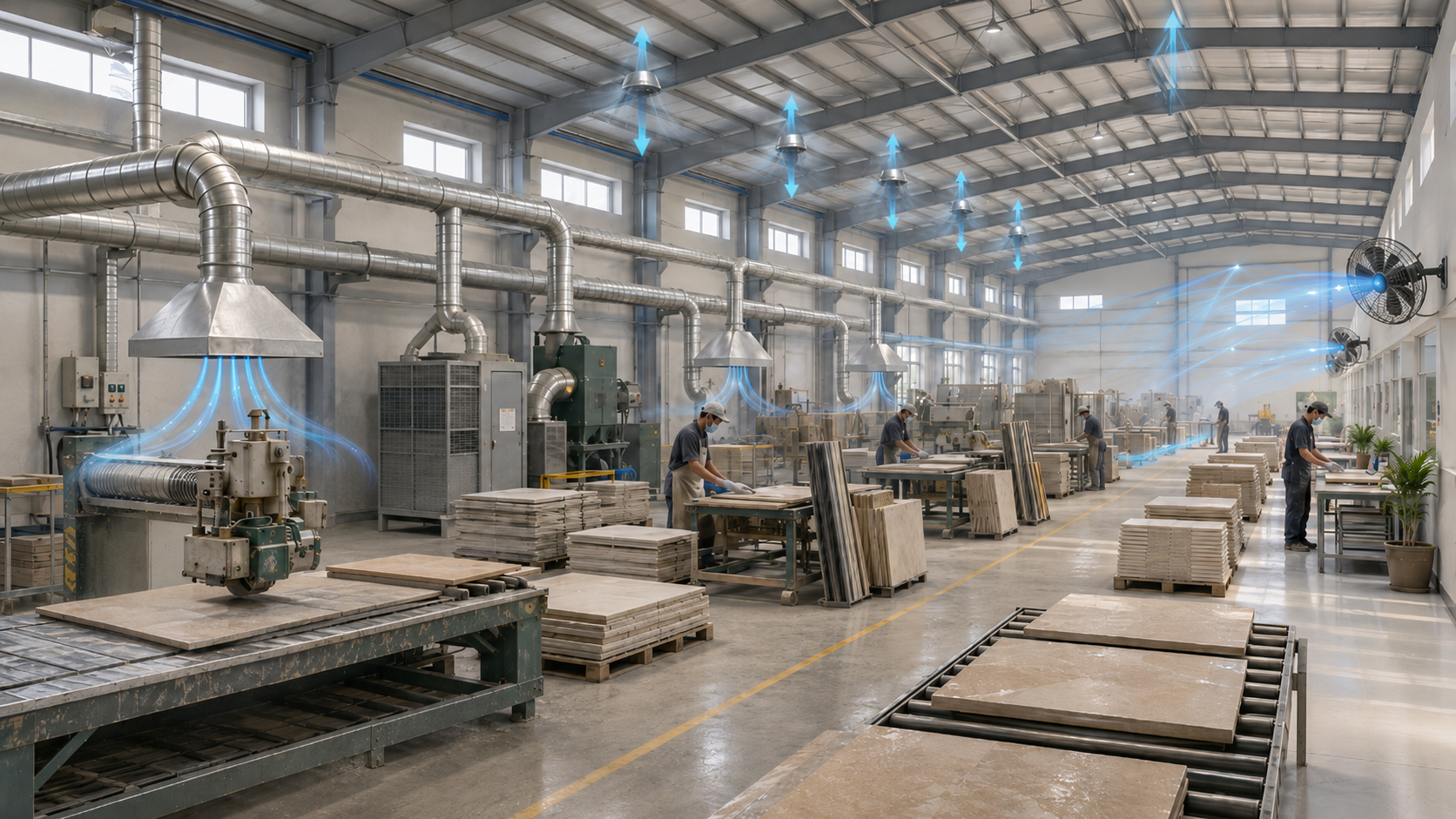
First, collection hoods are positioned at the cutting and polishing sources. The C6-46 fan draws air through dedicated duct branches so dust is captured before it moves into aisles, roof space, or the inspection zone. The duct path should be kept as direct as practical, with suitable access points for inspection and cleaning.
Second, DWT-I roof fans are arranged across the upper work zone to continuously discharge rising heat and residual airborne material. This high-level exhaust does not replace source capture; it supports the overall workshop air balance after the local extraction layer has addressed the main dust source.
Third, the inspection and packing area receives controlled local air movement. The supply direction is planned away from cutting and polishing points so it supports personnel comfort and does not disturb source-capture performance.
Practical Value for the Jeddah Workshop
The combined layout helps concentrate extraction capacity where dust is produced, supports the removal of heat from the upper workshop, and gives the inspection team a more suitable local working environment. It can also make cleaning routines and equipment maintenance more systematic because the collection, roof exhaust, and local supply functions are clearly separated.
Final fan selection should be confirmed using the number of stations, hood dimensions, duct length and bends, dust-treatment method, electrical supply, and the actual operating conditions. POPULA supports industrial projects with airflow and pressure review, layout discussion, equipment selection, and export delivery coordination.