
Solutions
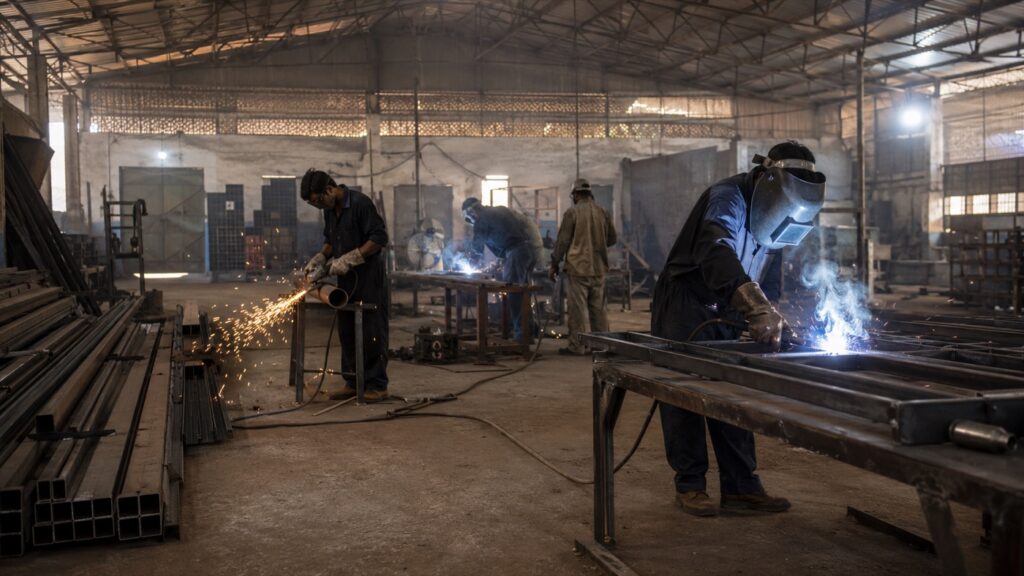
A metal fabrication workshop in Karachi can face two connected ventilation challenges: welding and grinding smoke must be captured before it spreads across the work floor, while heat and residual airborne particles accumulate under the high roof. This POPULA Karachi welding fume extraction solution combines C6-46 dust centrifugal fans for source extraction, DWT-I roof axial fans for high-level discharge, and SF(G) axial fans for local worker airflow.
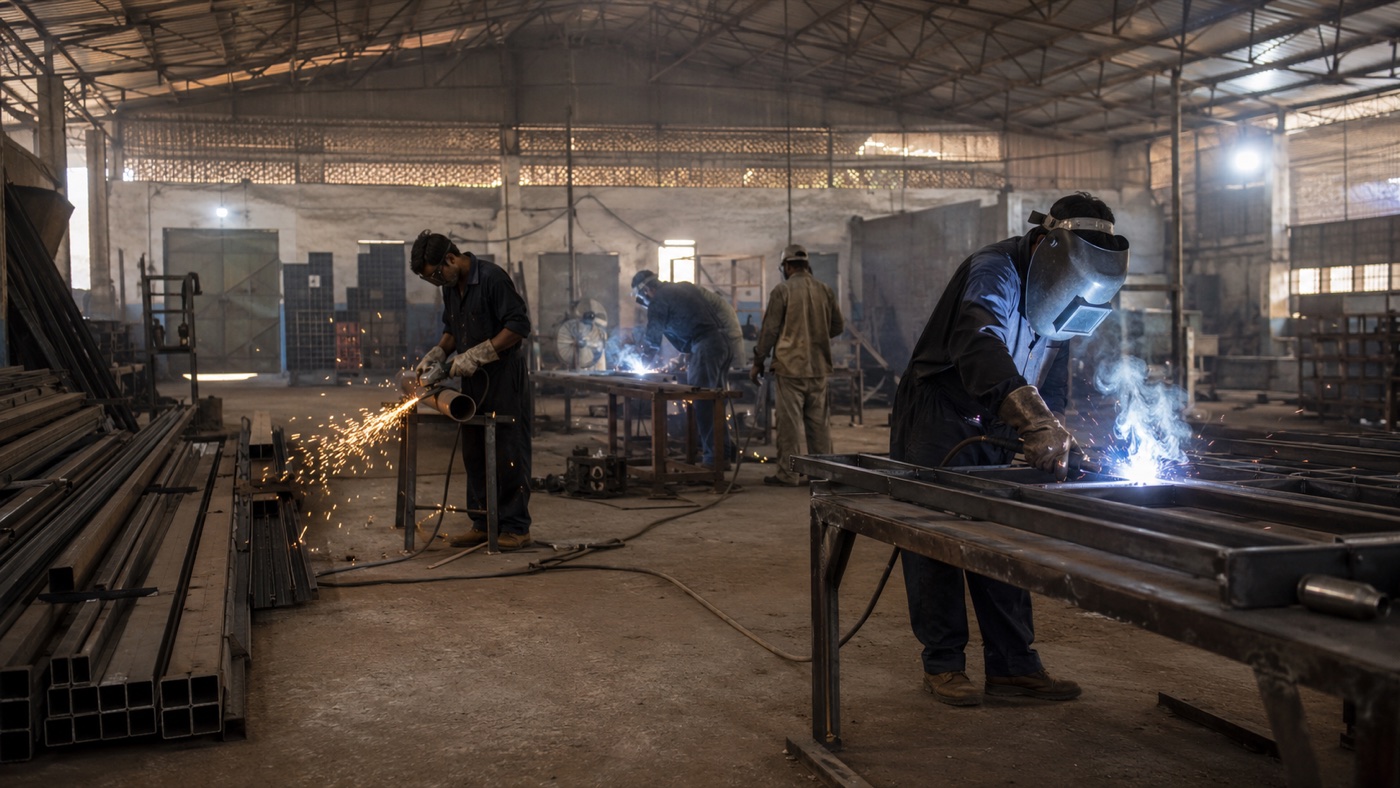
POPULA Karachi welding fume extraction solution for metal fabrication
Welding bays, grinding benches and finishing stations can release fine particulate, fumes and heat at different points in the same workshop. If extraction is only provided at the roof, contaminants can pass through the occupied zone before reaching the discharge point. If only local extraction is used, the building may still retain heat and residual haze at high level. The proposed layout addresses both airflow paths while also improving conditions at assembly and inspection positions.
Why the C6-46, DWT-I and SF(G) combination fits this application
At welding and grinding stations, the C6-46 dust centrifugal fan is connected to collection hoods and extraction ducting. Its six-blade, wear-resistant design is intended to reduce dust accumulation and support source extraction where the conveyed-air temperature does not exceed 80°C.
For high-level heat and remaining airborne particles, DWT-I roof axial fans provide large-volume roof discharge. Their fiberglass construction supports corrosion resistance in industrial environments; applicable operating conditions should keep the gas temperature at or below 60°C. Available airflow selections extend up to 53,855 m³/h, subject to the final system resistance and project selection.
At worker positions, SF(G) axial fans provide low-noise, high-volume local airflow. Fixed, adjustable and mobile installation forms allow the project layout to direct airflow toward assembly or inspection zones without treating the local fan as a substitute for source fume capture.
How the workshop airflow layout works
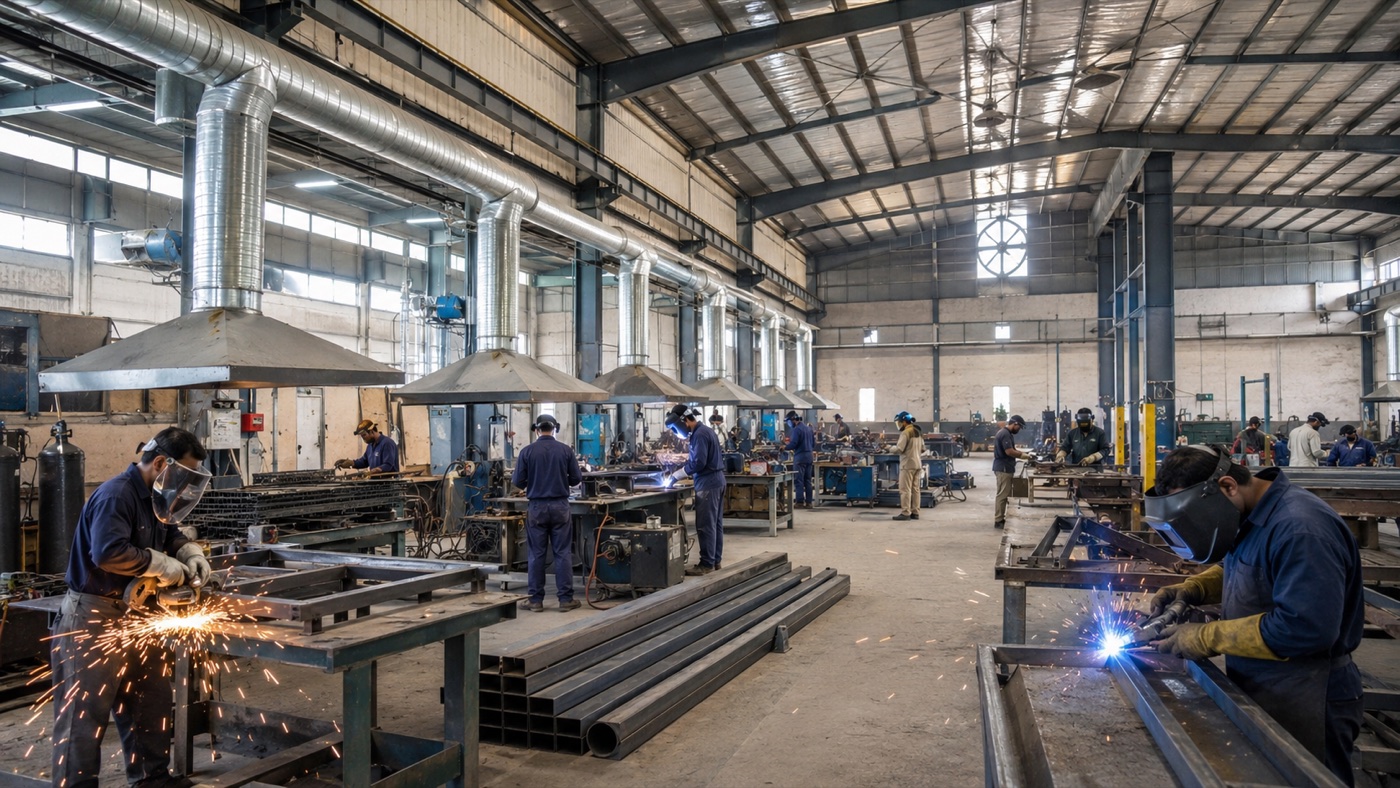
First, collection hoods are positioned as close as practical to welding and grinding emission points. Duct branches lead to the C6-46 extraction fan so smoke and dust are removed before they disperse through the occupied area. Second, DWT-I roof fans are arranged at high points where warm air and residual haze naturally collect, with make-up-air paths considered as part of the design. Finally, SF(G) units are placed away from the capture hoods and directed across assembly and inspection positions to give personnel a more comfortable airflow path.
Final fan quantities, duct diameters, hood geometry and electrical specification must be selected from the real layout, process duty, existing openings and calculated airflow and pressure requirements.
Practical value for a Karachi metal fabrication workshop
The three-level arrangement separates the functions of source capture, building heat discharge and worker comfort. It helps project teams avoid relying on one fan type for every requirement, while keeping the ventilation discussion focused on the actual work process and airflow route.
POPULA supports industrial ventilation projects with application-based fan selection, duct-layout discussion and installation-condition review. Share the workshop dimensions, process locations, hood requirements, operating temperature and power supply with the project team for a more suitable solution.