
News
Industrial fan corrosion is best prevented by matching the fan construction and maintenance plan to the actual exposure at the installation site. Before choosing a centrifugal fan, identify whether it will face condensation, washdown, outdoor weather, process vapors, or dust deposits. Ask the supplier to confirm suitable materials and protective details for those conditions; do not assume a standard product has a particular corrosion rating.
Start with the exposure, not the fan label
Describe the operating environment in practical terms. Note the source of moisture or contaminants, how often exposure occurs, whether deposits can collect inside the casing, and the expected operating and cleaning conditions. Temperature changes can also create condensation, even in a space that is not routinely washed.
For a supplier review, share the process description, air stream contents, expected temperature range, duty cycle, installation location, cleaning method, and any known chemical exposure. If the exact composition or concentration is uncertain, say so. This information helps the supplier assess the application instead of relying on a broad label such as “humid” or “corrosive.”
Review every exposed component
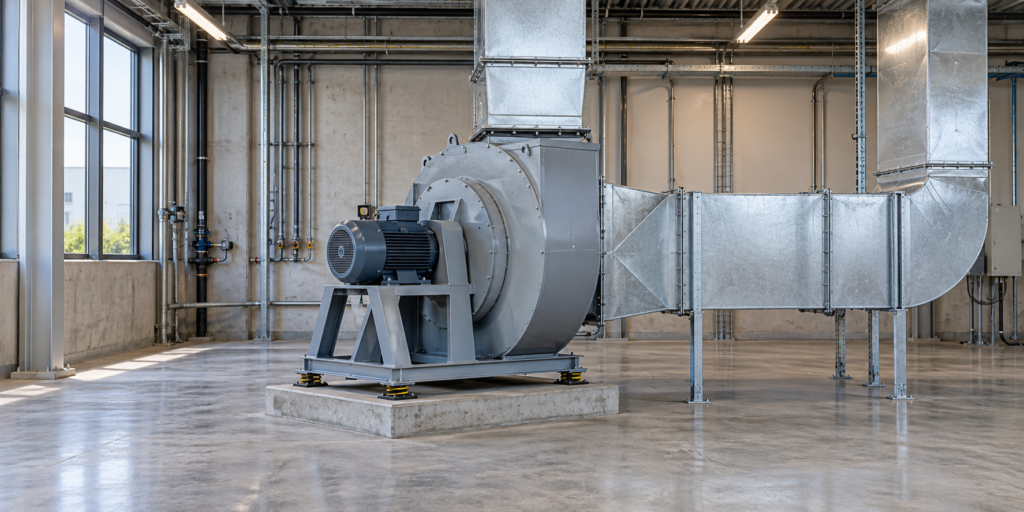
The casing is only one part of a fan assembly. Ask what materials or protective treatments are specified for the casing, impeller, shaft, fasteners, guards, and other exposed components. Confirm whether the motor and electrical items are located in the air stream or exposed to the surrounding environment, and check their suitability separately.
Possible material or coating choices depend on the specific exposure and product design. A coating can be damaged during handling or service, and dissimilar materials may need careful consideration where moisture is present. Request the model-specific construction details and care instructions in writing. This article does not assign a corrosion class or promise that any particular material is suitable for every process.
Check the fan and system together
Protective measures should not obstruct the intended airflow or prevent safe inspection. Review the inlet and outlet arrangement, supports, access panels, drains where the design provides them, and locations where liquid or dust could accumulate. The fan should be installed according to its approved drawing and instructions, with ducts and supports arranged so they do not place unintended loads on the casing.
For dust-handling applications, ask how the selected fan is intended to be used and what cleaning or inspection procedure applies. Deposits can change the condition of rotating parts, so inspection should follow the equipment documentation and site safety procedures. Do not scrape, coat, or modify an impeller without approval from the manufacturer or a qualified service provider.
Questions to ask before ordering
- Which components contact the process air, and what are their specified materials?
- What protective treatment is included, and what handling or repair limits apply?
- Is the proposed construction appropriate for the stated moisture, chemical, temperature, and cleaning conditions?
- What inspection points and maintenance instructions should the site follow?
- Which drawings, product data, or written application confirmation will be supplied for this model?
Compare the answers with the actual site conditions and keep the approved product information with the maintenance records. You can review a centrifugal dust-extraction fan product listing as one example from the site catalog, then confirm with the supplier whether its documented construction fits your application.
Frequently asked questions
Does a coated fan automatically suit a corrosive environment?
No. Suitability depends on the exposure, coating specification, component materials, and maintenance conditions. Ask for confirmation for the exact model and process.
Can I determine corrosion resistance from a product photo?
No. A photo does not identify the material grade, coating system, or limits of use. Check the model documentation and obtain written application guidance.
What should I do if corrosion appears during operation?
Follow the site isolation and safety procedure, document where and how the corrosion appears, and ask qualified service personnel or the supplier to assess the cause before returning the equipment to service.