
News
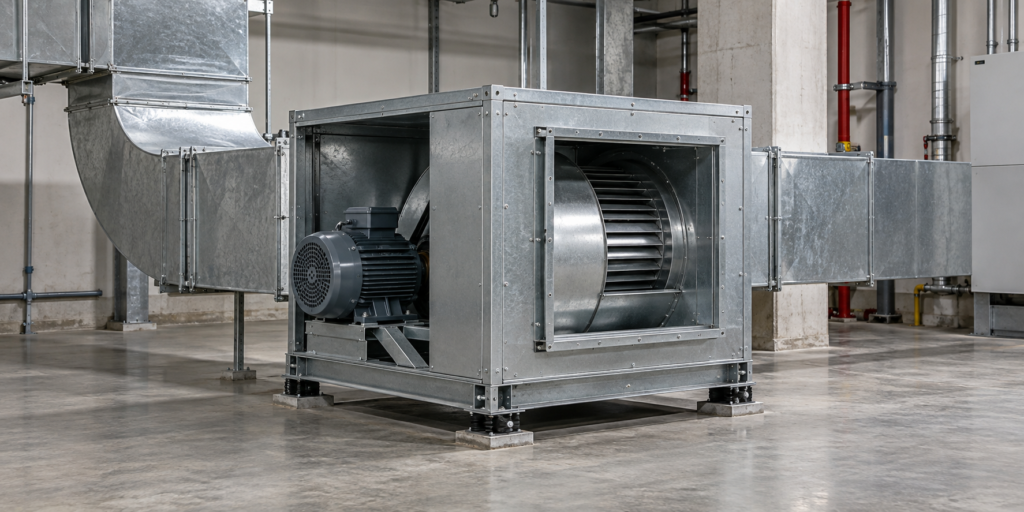
When reviewing an HTFC centrifugal fire exhaust fan, the model table is a useful first screening tool. It lists a range of configurations and operating data, but it does not replace checking the fan against the project’s required duty point. This guide explains what each column means and how to compare entries without choosing from one number alone.
Start with the series and model designation
The HTFC product page presents single-speed HTFC-I and double-speed HTFC-II series. Begin by confirming which series is being reviewed and record the complete model designation exactly as shown. Similar model sizes can appear with different speed or power combinations, so do not compare rows until the series and full model have been matched to the quotation or equipment schedule.
Understand the main table columns
- Power (kW): The listed motor power for that model configuration. Confirm the electrical supply and motor details with the project documents and supplier.
- Rotation (r/min): The listed rotational speed. In the double-speed series, check which operating speed corresponds to each listed condition.
- Volume (m³/h): The published airflow range for the row. Compare the required airflow with the selected model’s operating data rather than assuming the upper end is available under every system condition.
- Pressure (Pa) and static pressure (Pa): Separate pressure data shown in the product table. Use the pressure definition specified by the project designer and confirm the fan’s operating point against the system resistance.
See the HTFC centrifugal fire exhaust fan product page for the current model table and product notes.
A practical way to compare candidate rows
- Write down the required airflow and the pressure basis used by the project.
- Filter the table to the correct series and shortlist models whose published data can be reviewed against those requirements.
- Check the complete model, motor power and rotational speed together; do not select a row based on airflow alone.
- Ask the supplier to confirm the operating point, temperature rating, electrical details and applicable local fire-safety requirements for the intended smoke-exhaust duty.
The figures on a product page are reference data for listed configurations. The final selection should be checked against the actual duct system, operating condition and project requirements. If the duty point or rating is unclear, request written confirmation before ordering.
Frequently asked questions
Does a higher airflow value automatically mean the right fan?
No. Airflow must be considered together with the required pressure and the complete system conditions. A high value in one column by itself is not enough to confirm suitability.
What is the difference between HTFC-I and HTFC-II?
The product page labels HTFC-I as the single-speed series and HTFC-II as the double-speed series. Confirm the selected model’s listed speed and power configuration with the supplier.
Can the table alone confirm a fire-smoke exhaust application?
No. The product page advises confirming the smoke-exhaust duty, temperature rating and local fire-safety requirements before selection. Project-specific review is still needed.
For help matching a listed HTFC model to a project duty, contact the supplier through the indblower.com contact page.