
Solutions
This Riyadh hotel kitchen exhaust ventilation solution was prepared for a medium-size hotel kitchen project in Riyadh, Saudi Arabia, where the cooking line needed stable oil-smoke exhaust, heat removal, and controlled fresh air supply during peak meal preparation. The kitchen served both restaurant and banquet operations, so steam, cooking fumes, and warm air could build up quickly around the stove, fryer, and preparation areas. POPULA proposed a duct-connected kitchen ventilation approach using DT series cabinet centrifugal fans as the main exhaust fan and ATF box type forced draft fans as the independent make-up air unit.
Riyadh hotel kitchen exhaust ventilation solution application scenario
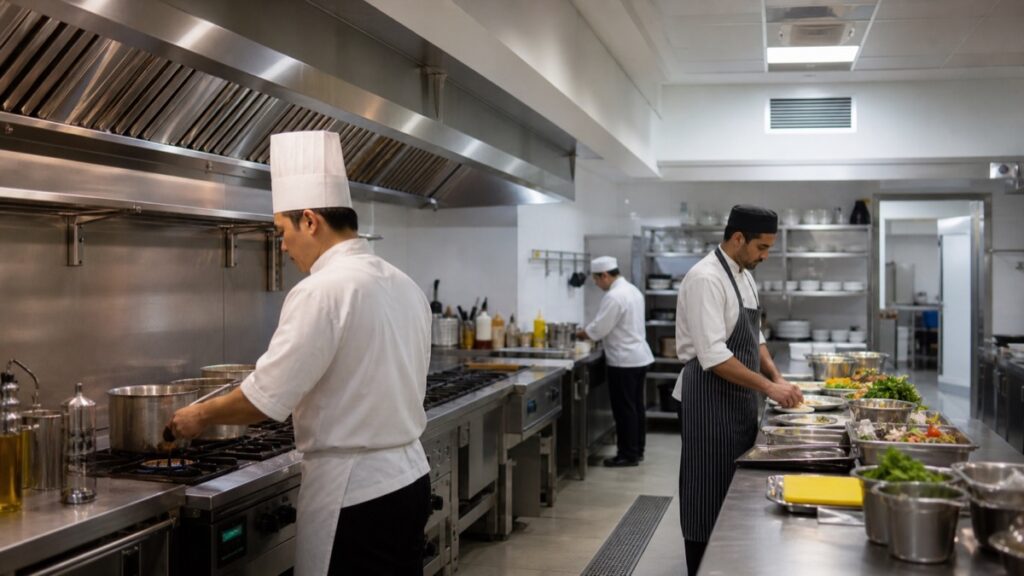
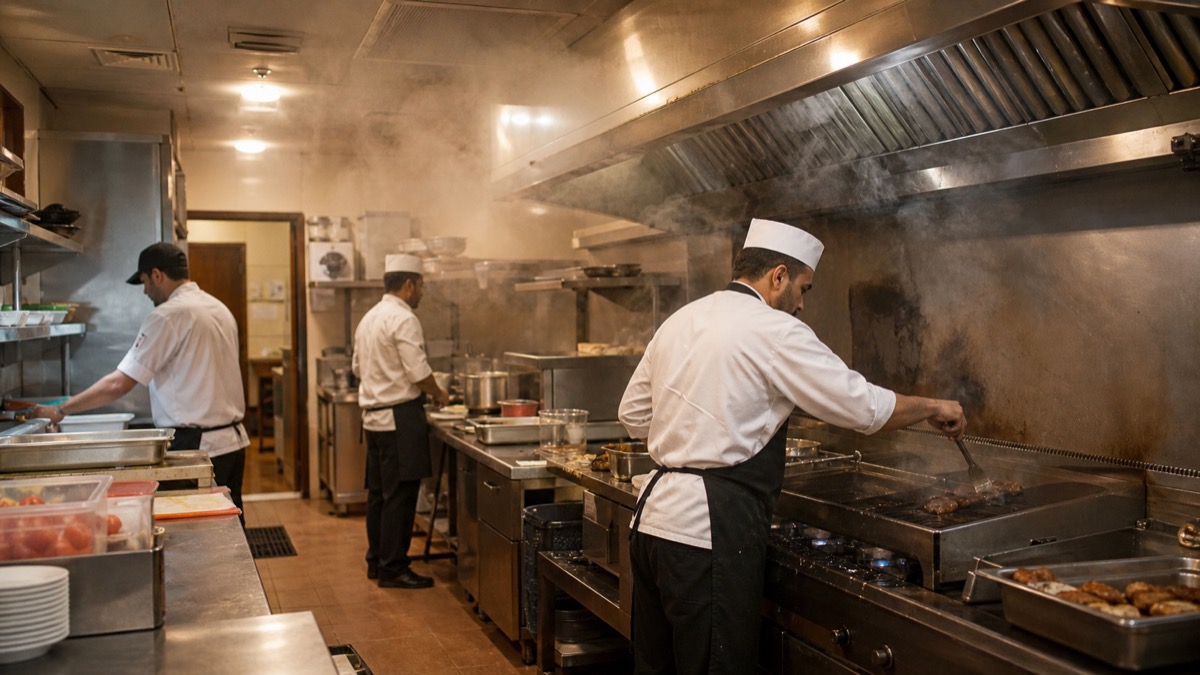
The project scenario was a hotel back-of-house kitchen in Riyadh. The kitchen included cooking ranges, frying equipment, food preparation tables, and a service passage connected to nearby back-office and dining support areas. During busy service periods, several cooking processes operated at the same time, increasing the amount of hot air, oil smoke, and odor around the exhaust hood area.
The main challenge was not only removing smoke from the cooking area. If the exhaust system pulled air out too strongly without enough make-up air, the kitchen could form excessive negative pressure. This may cause doors to feel difficult to open, reduce exhaust hood capture stability, and draw air from corridors or other indoor spaces in an uncontrolled way.
For this reason, the solution needed two coordinated layers: a stable exhaust fan for the kitchen hood and duct system, and an independent mechanical make-up air system to introduce outdoor air in a controlled direction.
Why choose DT cabinet centrifugal fans and ATF forced draft fans
For the main kitchen exhaust fan, the recommended product was the DT series cabinet centrifugal fan. Based on the provided product information, the DT series is suitable for hotel, restaurant, and civil-building ventilation applications, including kitchen exhaust and air exchange. Its cabinet structure is convenient for duct connection, indoor or outdoor installation, and maintenance access.
The DT series also fits the practical requirements of hotel kitchens because it is designed with high efficiency, low noise, compact structure, small vibration, light weight, and convenient installation and maintenance. For kitchen exhaust conditions, the transported gas temperature should be no higher than 80℃. For a medium-size hotel kitchen, DT-15# to DT-20# can be considered as a reference range, with final selection depending on the number of cooking appliances, hood size, duct length, airflow requirement, and static pressure resistance.
For the make-up air layer, the recommended product was the ATF box type forced draft fan. ATF fans are suitable for air supply, exhaust, ventilation, and supporting air-conditioning or ventilation projects in hotels, civil buildings, shopping malls, cinemas, gymnasiums, and similar spaces. In this kitchen project, ATF was used as the fresh air supply unit to help balance pressure and support more stable exhaust performance.
How POPULA arranged exhaust and make-up air for the kitchen
The first step was source exhaust. The DT cabinet centrifugal fan was connected to the kitchen exhaust hood and duct route to remove oil smoke, steam, heat, and odor from the main cooking line. Because hotel kitchens may operate for long daily schedules, fan selection needed to consider airflow volume, duct resistance, operating noise, installation position, and maintenance access.
The second step was controlled make-up air. The ATF box type forced draft fan was arranged as an independent mechanical fresh air system. Instead of relying only on door gaps or uncontrolled corridor air, outdoor air could be introduced through a planned duct path and supplied near suitable zones. This helped reduce excessive negative pressure while still keeping the kitchen slightly negative to prevent oil smoke from spreading into adjacent areas.
As a design reference, make-up air volume can often be controlled at about 80% to 90% of the exhaust air volume. The exact value should be checked according to the kitchen layout, hood type, duct route, local design requirements, and operating conditions. The goal is not to make the kitchen neutral or positive, but to maintain a controlled slight negative pressure while avoiding uncomfortable airflow and unstable door pressure.
Actual value for the Riyadh hotel kitchen project
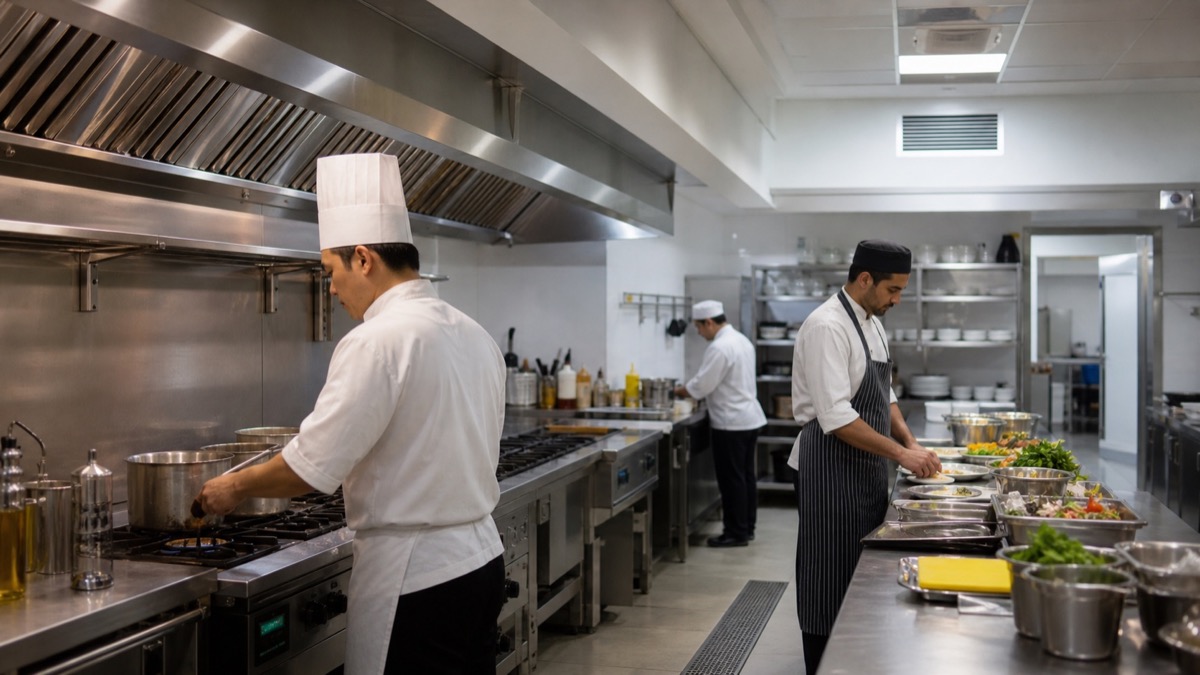
The value of this solution was that it treated kitchen ventilation as a balanced system, not only as an exhaust fan purchase. DT handled the main cooking-line exhaust task, while ATF supported mechanical fresh air supply so the kitchen could maintain better pressure balance during peak cooking periods.
The proposed layout supported the project in several ways:
- Helped remove heat, oil smoke, steam, and odor from the cooking line
- Reduced the risk of excessive negative pressure caused by strong exhaust
- Supported more stable hood capture performance during busy kitchen operation
- Helped protect nearby corridors, service passages, and dining support areas from odor spread
- Provided a duct-connected fan arrangement suitable for hotel kitchen project planning
For hotel kitchens, restaurant kitchens, commercial cooking areas, and building ventilation projects in hot-climate markets, POPULA can review hood size, cooking equipment, duct length, airflow demand, static pressure, make-up air ratio, installation space, and maintenance requirements before recommending suitable fan models. POPULA fan solutions can support practical kitchen exhaust and fresh air ventilation planning for hotel and commercial building projects.