News
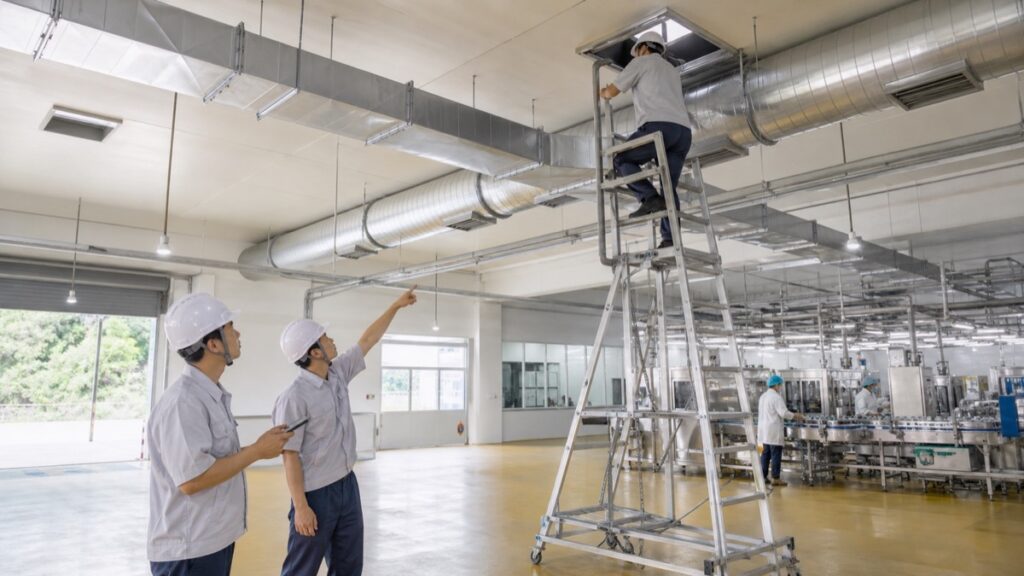
POPULA is seeing more project discussions around planned inspections and upgrade work as food and beverage facilities across Southeast Asia prepare for hotter, more humid operating periods. POPULA preventive ventilation fan maintenance helps facility teams review airflow performance, duct condition, access requirements, and equipment readiness before heat, moisture, and extended production schedules place additional pressure on a ventilation system.
For production sites with processing rooms, packing zones, utility areas, and roof-level exhaust points, ventilation maintenance is no longer only a reactive task. Teams increasingly use planned shutdowns or low-production windows to inspect key components, identify access constraints, and decide whether targeted repairs or a broader upgrade are needed.
POPULA Preventive Ventilation Fan Maintenance for Southeast Asian Food Facilities
Food and beverage facilities often operate with a combination of fresh-air supply, process exhaust, general ventilation, and local extraction. Seasonal humidity, wash-down routines, airborne residue, and long daily operating hours can affect how these systems perform over time.
A practical maintenance review starts with the real airflow path. This includes checking intake and discharge conditions, duct joints, grilles, access doors, vibration points, and areas where residue or moisture may affect normal service. The aim is to make sure that the equipment and duct system can continue to support the required operating environment rather than simply confirming that a motor can run.
Why Planned Inspection Supports Better Ventilation Decisions
When maintenance is planned in advance, site teams can evaluate equipment around actual process requirements. They can compare airflow needs across processing and packing zones, review whether duct resistance has changed, and identify locations where access or service clearances should be improved.
This also creates a clearer basis for equipment selection when a replacement or expansion is required. Fan type, airflow, pressure, installation position, power supply, corrosion considerations, and maintenance access should all be considered together with the facility layout.
From Inspection Findings to a Practical Upgrade Plan
Not every site needs a complete system replacement. In some projects, the priority may be improving local extraction near a process line; in others, it may be restoring roof-level exhaust capacity, reorganizing make-up air, or creating better access for routine service.
By documenting the operating environment and the existing duct route before selection, facility managers can reduce guesswork when discussing an upgrade. This is especially useful where production cannot be interrupted for long periods and installation needs to be coordinated with a planned maintenance window.
POPULA Support for Ventilation Maintenance and Upgrades
POPULA supports industrial projects with practical discussions around airflow, pressure, installation conditions, and maintenance requirements. For a more accurate review, share the facility layout, operating area, existing duct information, voltage, and the issues observed during inspection with the project team.