News
POPULA is seeing growing interest in practical dust-control upgrades as metalworking, fabrication, and processing workshops across South Asia review their ventilation layouts. POPULA dust extraction fan demand is closely connected to projects where airborne particles, heat, and process residue must be captured near the source instead of being allowed to circulate through the work area.
For many established workshops, the issue is not simply whether a fan is operating. The real question is whether the system can maintain useful airflow through hoods, duct branches, bends, filters, and discharge points while production is running. Retrofit planning therefore increasingly focuses on matching fan pressure capability, duct resistance, collection points, and maintenance access to the actual process conditions.
POPULA Dust Extraction Fan Demand for South Asian Industrial Retrofits
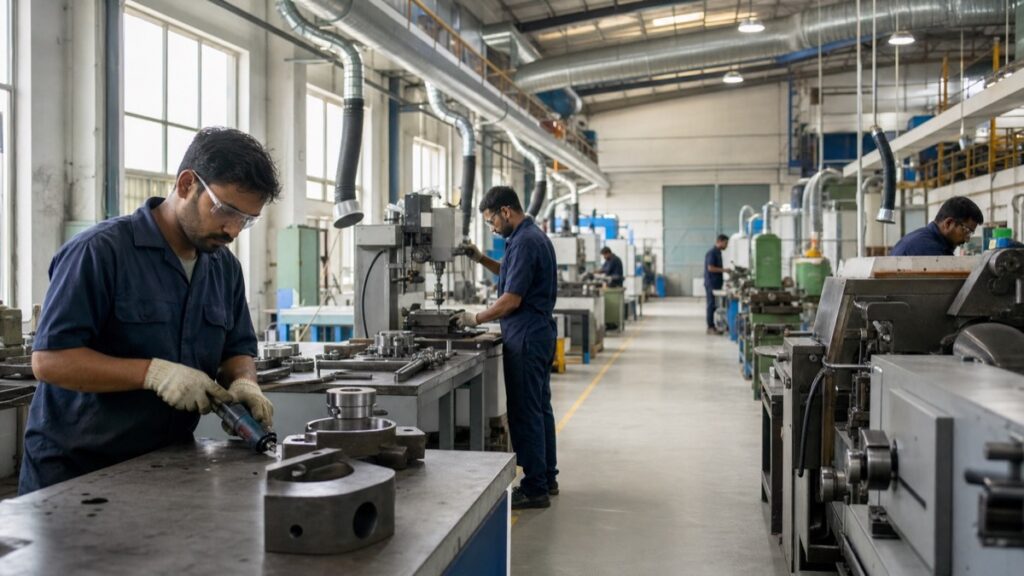
Industrial retrofit work is becoming a practical route for facilities that need to improve extraction without rebuilding an entire production line. In fabrication, grinding, polishing, packaging, and material-handling areas, dust and fine process residue can gather around individual machines or travel into adjacent work zones when local capture is insufficient.
A well-planned extraction upgrade begins with the source. Engineers review the type of material, likely particle load, required collection points, duct route, and the resistance created by filters or treatment equipment. This helps determine whether a higher-pressure centrifugal fan arrangement, a local exhaust branch, or a combined ventilation layout is the more suitable starting point.
Why Pressure and Duct Design Matter
Large airflow alone does not guarantee effective dust extraction. Once air must move through a duct system, elbows, collection hoods, and filtration equipment, static pressure becomes a key selection factor. A fan that is suitable for open-area ventilation may not be suitable for a long or resistance-heavy extraction system.
For this reason, POPULA discusses airflow and pressure together with customers before recommending a configuration. The required fan should be selected around the real system resistance and operating duty, rather than only a nominal airflow figure.
From Local Capture to a More Orderly Workshop
When collection hoods and duct branches are positioned near the dust-producing process, the system can reduce the amount of residue that spreads into nearby aisles and workstations. The benefit is not limited to air movement: a more orderly extraction layout can also support routine cleaning, clearer work areas, and more consistent production conditions.
Each project still needs site-specific confirmation. Material type, temperature, moisture, particle characteristics, duct dimensions, filtration method, and applicable local requirements should all be reviewed before final equipment selection and installation.
POPULA Project Support for Extraction Upgrades
For workshops planning a dust-control retrofit, POPULA can help review airflow requirements, pressure conditions, duct layout considerations, and suitable industrial fan options. Share the process, collection points, duct information, and operating environment with the project team to start a more accurate selection discussion.