
News
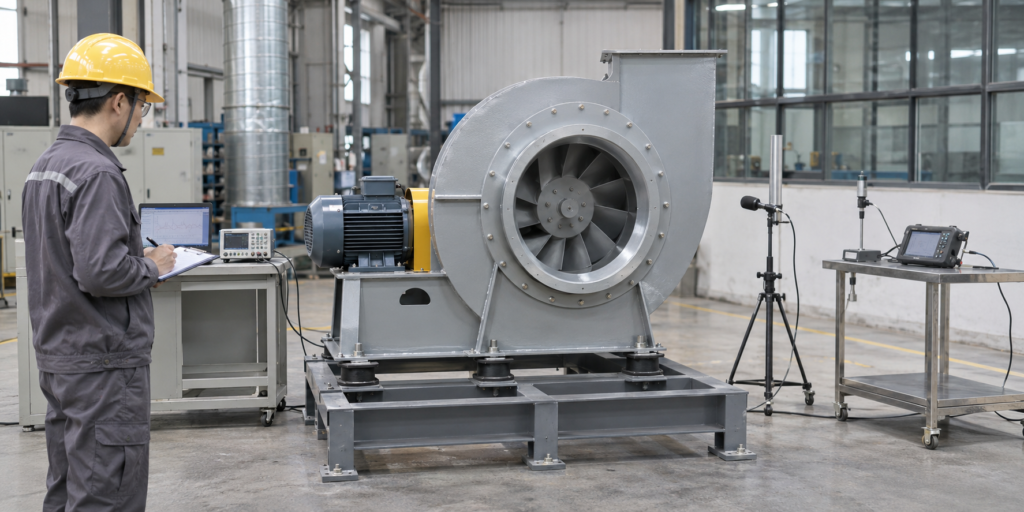
An industrial fan test report is useful only when it can be matched to the ordered model and the performance data the project needs. On this site, the documented quality process includes incoming-material checks, dynamic balancing, performance inspection and final release. Buyers can use those stages to ask clear questions about the inspection record for their equipment.
What the factory testing process covers
The indblower.com quality-control overview describes four stages. Incoming-material checks cover steel, motors, electrical components and key purchased parts. Dynamic balancing checks impeller balance, vibration and operating stability before release. Performance inspection tests airflow, pressure, vibration, noise and motor-performance data. The export-ready release stage checks the nameplate, documentation, packaging and shipment readiness.
1. Match the report to the order
Start with the fan series and model shown on the report, then compare them with the quotation, order confirmation and nameplate details. Confirm any selected options or configuration that affect the equipment being supplied. If a report covers a series or sample unit rather than the exact ordered configuration, ask the supplier to clarify its scope.
2. Check airflow and pressure together
Compare the stated airflow and pressure with the operating point requested for the project. These values describe performance under stated test conditions; they should be considered together rather than reading the largest airflow figure as the expected result in every installation. If the report does not state the test setup or conditions, request that information before comparing it with the project requirement.
3. Review balance, vibration, noise and motor data
The site lists impeller dynamic balance, vibration, noise and motor-performance inspection as parts of its quality process. Check that the report identifies which values were measured and which fan or configuration they apply to. Ask the supplier to explain the applicable acceptance criteria for the specific model and order; this page does not publish one universal limit for every fan series.
4. Separate product test reports from certificates
A product test report records results for a stated product or test scope. A management-system certificate or product-compliance document serves a different purpose. The indblower.com quality page lists third-party product test reports and compliance documents separately, including an axial-fan report and documents for selected product series. Confirm that any document you receive covers the model and use case in your project.
Buyer checklist before release
- Confirm the report and nameplate identify the ordered fan model and configuration.
- Compare airflow and pressure with the project duty point and test conditions.
- Check whether balance, vibration, noise and motor data are included and clearly identified.
- Ask which acceptance criteria apply to this specific order.
- Confirm the documentation, packaging and shipment checks required for delivery.
Use the indblower.com product catalog to identify the relevant fan series. For drawings, performance information or a project-specific document request, contact the indblower.com technical team.
Frequently asked questions
Does one factory test report apply to every model in a fan series?
Not necessarily. Check the model, configuration and scope stated in the report, and ask the supplier whether it represents the unit being ordered.
Does a test report replace a compliance certificate?
No. They are different documents. Confirm which product test report and compliance documents are relevant to the model and project.
What if the report does not show test conditions?
Ask for the conditions and measured operating point before comparing the results with your project requirement. Avoid treating an unexplained value as a guaranteed field result.
Which details should I send when requesting test documents?
Provide the fan series and model, ordered configuration, required airflow and pressure, motor details and any project-specific documentation requirements. This helps the supplier identify the relevant records.