
News
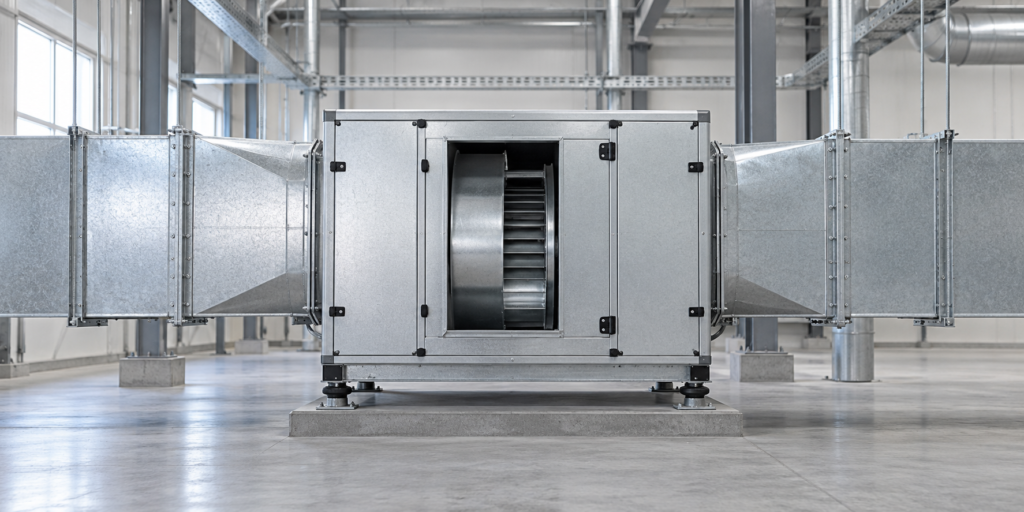
Cabinet fan installation planning starts with the airflow route, the duct arrangement and the space needed for inspection. Before ordering a BF series cabinet fan, define whether the system supplies or exhausts air, confirm the required airflow direction and leave practical access for service. The final selection should match the project duty and the manufacturer’s current product information.
1. Decide whether the fan is supplying or exhausting air
Start by drawing the airflow path from the intake point to the discharge point. Mark whether the fan will move air into a space or remove it. The BF series product information describes ducted supply-air and exhaust-air arrangements; confirm the permitted orientation for the exact model and installation before connecting the ducts. Do not assume that turning the cabinet around will produce the required direction.
Identify the air source and destination, nearby openings, and any equipment that could obstruct the path. For exhaust duty, check where discharged air will go. For supply duty, check how replacement air will enter the served area. These layout checks help avoid a design where the fan is connected but the overall route does not serve the intended purpose.
2. Coordinate duct connections with the site layout
Measure the available installation area and compare it with the selected cabinet and duct arrangement. Note the duct dimensions, direction of approach, support locations and nearby walls, beams or other services. Confirm connection details against the applicable product drawing rather than estimating from a photograph.
Keep the duct route as direct as the project allows and coordinate transitions, bends and access panels with the ventilation designer. Any added resistance in the system can affect the operating point, so the required airflow and pressure duty should be checked for the complete system, not the fan alone.
3. Leave room for inspection and maintenance
Plan how technicians will reach the fan, electrical isolation point and any service panels. Leave enough clearance to inspect the cabinet and remove components where the product design allows. Avoid placing permanent services or stored materials in the access area. The required clearance depends on the model and site conditions, so confirm it with the installation drawing and project team.
4. Verify the operating conditions before selection
Confirm the air or gas being handled, the required airflow, system pressure, supply voltage and installation environment. The BF series page lists model-specific operating data; use the row for the exact model and speed, and ask the supplier to confirm that the duty point suits the complete duct system. Do not select a fan by matching only a nominal airflow figure.
Also confirm whether the application has temperature, moisture, dust, grease or other conditions that require a different product type. This article is a planning guide; project-specific requirements should be reviewed by a qualified ventilation professional.
Pre-installation checklist
- Define supply or exhaust duty and draw the airflow route.
- Confirm cabinet orientation and duct connection details for the exact model.
- Check the required airflow and pressure against the system layout.
- Coordinate power, supports, access panels and service clearances.
- Verify the operating medium and site conditions with the product documentation.
Frequently asked questions
Can a cabinet fan be used for both supply and exhaust?
The BF series product information describes ducted supply-air and exhaust-air applications. Confirm the approved arrangement and airflow direction for the selected model before installation.
How much service clearance should be left?
Use the product installation drawing and project maintenance requirements to determine clearance. The needed space depends on the cabinet configuration and the parts that must be inspected or accessed.
What should be checked before connecting the ducts?
Verify the fan orientation, duct dimensions, required airflow and pressure, and access for installation and maintenance. Compare the design with the exact model data before commissioning.
For product details, see the BF series Cabinet Fan page and the Cabinet & Box Fans catalog. For a project-specific review, contact the POPULA team.