
News
BPT ceiling fan selection starts by matching airflow and static pressure to the room and duct system, then checking noise, power, voltage, mounting, and service access.
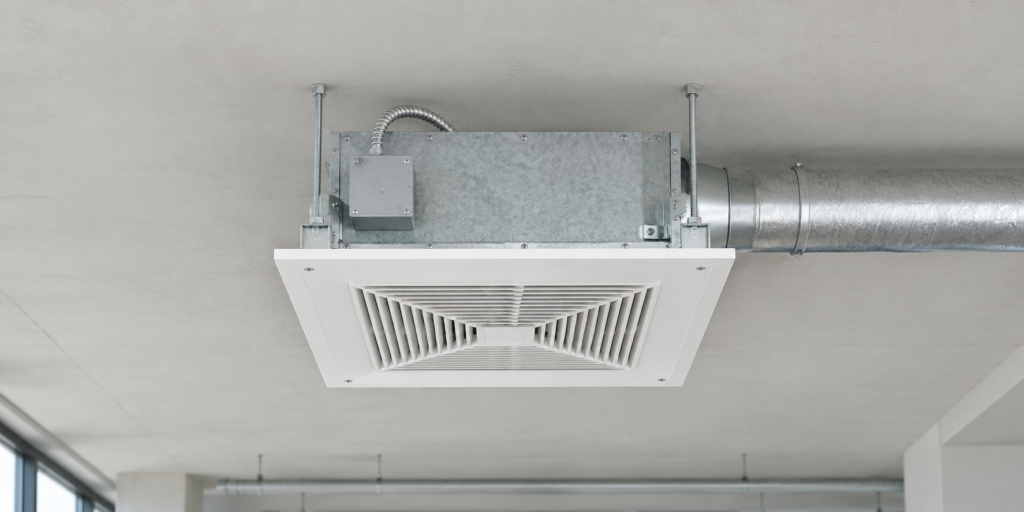
Choosing a ceiling-mounted duct fan starts with three checks: the airflow required at the room, the static pressure the installed duct system will impose, and the noise level acceptable for the space. The BPT product table on this site lists these values together, so buyers can compare models against the actual installation rather than relying on the model name or usable-area figure alone.
Read the BPT table as a set of operating clues
The published BPT Ceiling Mounted Ventilation Fan specifications list model, power, voltage, airflow, static pressure, usable area, and noise. Use the airflow and static-pressure columns first. Usable area is a guide in the table; it does not replace an airflow calculation for a room with a particular ceiling height, occupancy, ventilation rate, or duct arrangement.
| Model | Power (W) | Airflow (m³/h) | Static pressure (Pa) | Usable area (m²) | Noise dB(A) |
|---|---|---|---|---|---|
| BPT10-21S | 20 | 150 | 100 | 6–12 | 33 |
| BPT10-24SL | 22 | 200 | 110 | 8–16 | 35 |
| BPT10-24SH | 25 | 250 | 120 | 10–20 | 39 |
| BPT15-27SL | 35 | 300 | 120 | 12–24 | 33 |
| BPT15-27SH | 39 | 380 | 150 | 15–30 | 37 |
| BPT15-32S | 40/35 | 550/450 | 150/120 | 18–44 | 42/37 |
Values above are transcribed from the product page. The paired figures for BPT15-32S are shown as published; confirm the applicable operating condition and final selection with the supplier before ordering.
1. Estimate the airflow the room needs
Start with how the room is used and what it needs to remove or replace: people, moisture, odours, or general stale air. Establish a target airflow with the project designer or applicable ventilation requirements. Then compare that target with the BPT table. For example, the listed airflow rises from 150 m³/h on BPT10-21S to 380 m³/h on BPT15-27SH and 550/450 m³/h on BPT15-32S. Do not choose only from the usable-area range; ceiling height, room use, air-transfer path, and the number of operating units affect the result.
2. Check static pressure against the duct route
The table also lists static pressure. Duct length, bends, grilles, dampers, and other fittings can add resistance. A fan must be considered at the airflow it can deliver against the system resistance, not just at a free-air number. Compare the pressure requirement from the proposed layout with the listed value and ask for confirmation if the route has several fittings or a long duct run. The BPT overview specifically advises confirming mounting position, duct connection, airflow direction, and system resistance before selection.
3. Compare noise and installation constraints
Noise values in the table range from 33 to 42 dB(A), with the BPT15-32S also shown as 42/37 dB(A). If the fan serves a hotel room, office, or other noise-sensitive area, check the selected model’s listed noise alongside airflow and pressure. Also verify the ceiling opening, available service access, duct connection, electrical supply, and airflow direction. The listed models use 220 V; have the installer confirm the site supply and wiring requirements.
A practical selection sequence
- Define the room use and required ventilation airflow.
- Sketch the duct route and identify fittings that contribute resistance.
- Shortlist BPT models whose published airflow and static pressure can suit the design point.
- Compare noise, power, voltage, ceiling opening, and maintenance access.
- Confirm the final model and applicable paired values with the supplier before purchase.
For other layouts, compare the axial and general ventilation fan range. If the required airflow or system resistance is unclear, send the room and duct details through the indblower.com contact page for product-selection discussion.
Frequently asked questions
Is the usable-area range enough to choose a BPT model?
No. Treat it as a preliminary guide. Check the ventilation airflow required for the room and the pressure imposed by the installed duct system.
Should I choose the model with the highest airflow?
Not automatically. Select against the design airflow and system resistance, then check noise, power, voltage, mounting, and service access.
What does the BPT15-32S 550/450 airflow entry mean?
The product table shows paired airflow, static-pressure, power, and noise values for this model. The page does not explain the paired operating conditions, so confirm which figures apply to your intended installation with the supplier.
What information should I provide for a selection check?
Share the room dimensions and use, target airflow if known, duct diameter and approximate route, fittings, mounting position, electrical supply, and any noise limits. These details help compare the published table with the real installation.