
News
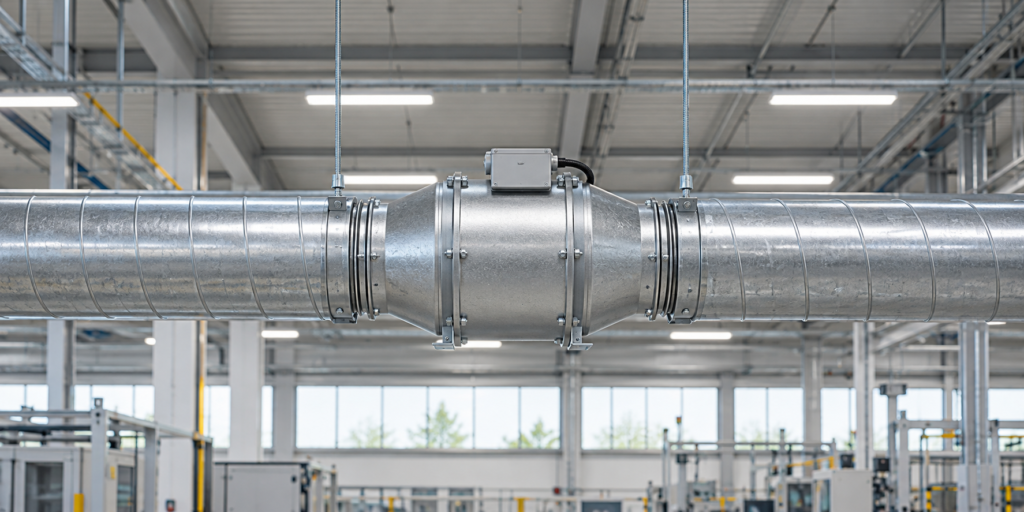
A long ventilation duct can lose airflow when resistance builds along the route. A mixed-flow duct booster fan may be worth evaluating when a system needs support through a longer duct run or a higher static-pressure requirement. The right choice still depends on the required airflow and the resistance of the complete installation.
POPULA’s JD Series mixed-flow duct ventilator is listed for longer duct runs and applications with higher static-pressure requirements. Use the points below to decide what information to confirm before selecting a model.
What makes a duct run demanding?
Duct length is only one part of system resistance. A narrow duct, several bends, flexible sections, filters, grilles, dampers, and abrupt transitions can all add resistance. The fan must work against the combined effect of these components while delivering the airflow needed at the point of use.
For that reason, “long duct” alone is not a complete selection specification. Two routes of similar length can behave differently if their diameters, fittings, and terminal equipment differ.
When to consider a mixed-flow duct booster
A mixed-flow inline unit is a candidate when the fan needs to fit directly into ductwork and the system calls for more pressure support than a simple short, open airflow path. The JD Series product page identifies longer duct runs and higher static-pressure applications as its intended use cases.
Before choosing, confirm the target airflow, the duct connection size, the installation position, and the airflow direction. Also account for the resistance from every fitting and accessory in the route. These checks help determine whether the listed model range fits the actual operating point.
Information to prepare before choosing a model
- Required airflow: State the airflow needed at the outlet or served area, using the units used in the product specifications.
- Duct dimensions: Record the duct diameter, total route length, and any changes in size.
- Fittings and accessories: List bends, flexible duct, filters, dampers, grilles, and other restrictions.
- Installation details: Confirm available space, mounting position, connection method, and the direction of airflow.
- Operating conditions: Describe the air being moved and the expected duty cycle so that suitability can be checked against the product documentation.
Do not select a fan from its maximum airflow figure alone. Check the model’s published airflow and pressure information against the system requirement, and ask for confirmation if the operating point or installation conditions are unclear.
Installation checks that affect performance
Follow the product instructions for duct connections, support, electrical supply, and clearances. Keep the duct route as direct as practical, avoid unnecessary sharp transitions, and make sure the fan is installed in the specified airflow direction. Poorly supported ductwork or a mismatch between the fan and the system can undermine the expected result.
After installation, verify that the system delivers the required airflow and that the unit operates as expected. If the result is below the design target, inspect the complete route for blocked filters, closed dampers, leaks, or unexpected restrictions before changing the fan selection.
Frequently asked questions
Is a longer duct run enough reason to add a booster fan?
No. The full system resistance and required airflow matter. Measure or calculate the installation conditions and compare them with the fan’s published performance data.
Can I choose a model using duct diameter alone?
No. Duct size is important, but the route length, fittings, accessories, airflow target, and installation details also affect selection.
Where can I review the JD Series details?
See the JD Series mixed-flow duct ventilator product page for the listed models and specifications. For a project-specific check, use the POPULA contact page and provide the airflow target and duct layout.
Summary
A mixed-flow duct booster fan can be considered for a longer duct route when the system requires additional pressure support and an inline installation. Confirm the complete airflow requirement, duct resistance, model data, and installation conditions before deciding whether the JD Series is suitable.