
Solutions
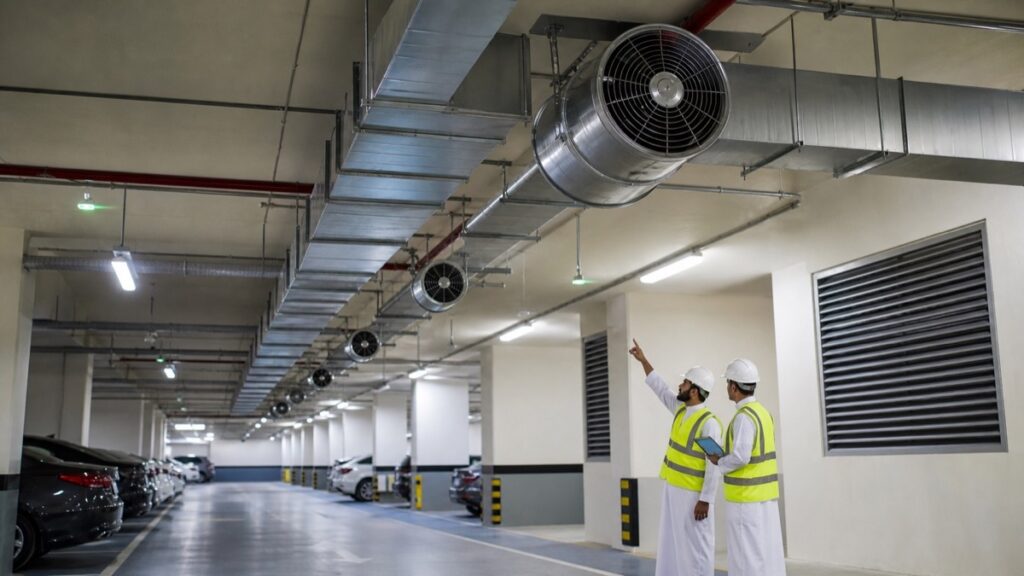
This Riyadh underground parking ventilation solution was prepared for a commercial building project in Riyadh, Saudi Arabia, where the basement parking area required reliable daily ventilation and a separate fire smoke exhaust strategy. The site faced typical underground parking problems, including weak natural ventilation, vehicle exhaust accumulation, warm air retention, airflow dead zones near ramps and corners, and the need for coordinated supply air. POPULA proposed a layered ventilation approach using HTFC/DT cabinet centrifugal fans or SWF mixed-flow fans for daily exhaust, HTF-A axial fire smoke exhaust fans for emergency smoke extraction, and PYD induction fans with EG/SF axial fans or DWT roof fans for air organization and make-up air support.
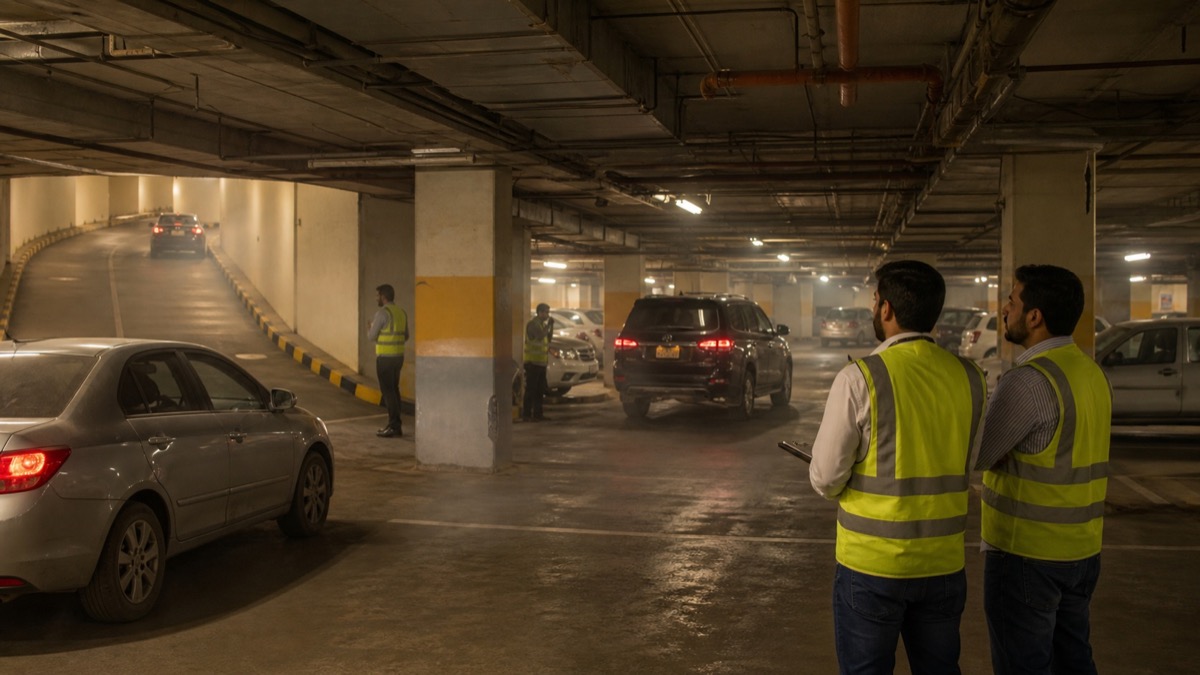
Riyadh underground parking ventilation solution application scenario
The project was a multi-zone underground parking area serving a commercial building in Riyadh. The parking layout included vehicle ramps, driving lanes, parking bays, equipment rooms, and pedestrian access areas. Because the basement space was enclosed, natural airflow was limited and air movement depended on mechanical ventilation.
During daily operation, vehicles could release exhaust and heat while moving through ramps and parking aisles. Without an organized airflow route, some areas could remain stagnant, especially corners, low-speed driving zones, and areas far from exhaust points. The project also needed a fire smoke exhaust plan that could work separately from daily ventilation requirements.
The ventilation solution therefore needed to address three different tasks: normal exhaust for daily air quality, smoke exhaust for emergency conditions, and supply or induced airflow to help air move through the parking layout.
Why choose HTFC/SWF, HTF-A, and PYD/EG/SF/DWT equipment
For daily exhaust, HTFC or DT cabinet centrifugal fans and SWF mixed-flow fans can be used to continuously remove vehicle exhaust, warm air, and odor from the parking area. These fans are suitable for duct-connected systems where air needs to be collected from different zones and discharged through a planned exhaust path.
For fire smoke exhaust, HTF-A axial fire smoke exhaust fans were considered as the emergency exhaust layer. Based on the provided product information, HTF-A fans are designed for fire smoke exhaust applications and can operate under 280°C / 30 min fire smoke conditions. Final model selection should still be checked according to project drawings, local fire requirements, required airflow, static pressure, and duct resistance.
For air organization and make-up air support, PYD induction fans, EG/SF axial fans, and DWT roof fans can be arranged according to the project layout. PYD induction fans help guide air movement inside the parking area, reducing stagnant zones without requiring a full duct branch at every point. EG/SF axial fans and DWT roof fans can support supply air, exhaust outlets, or auxiliary airflow paths depending on the building design.
How POPULA arranged the airflow layout and solved the problem
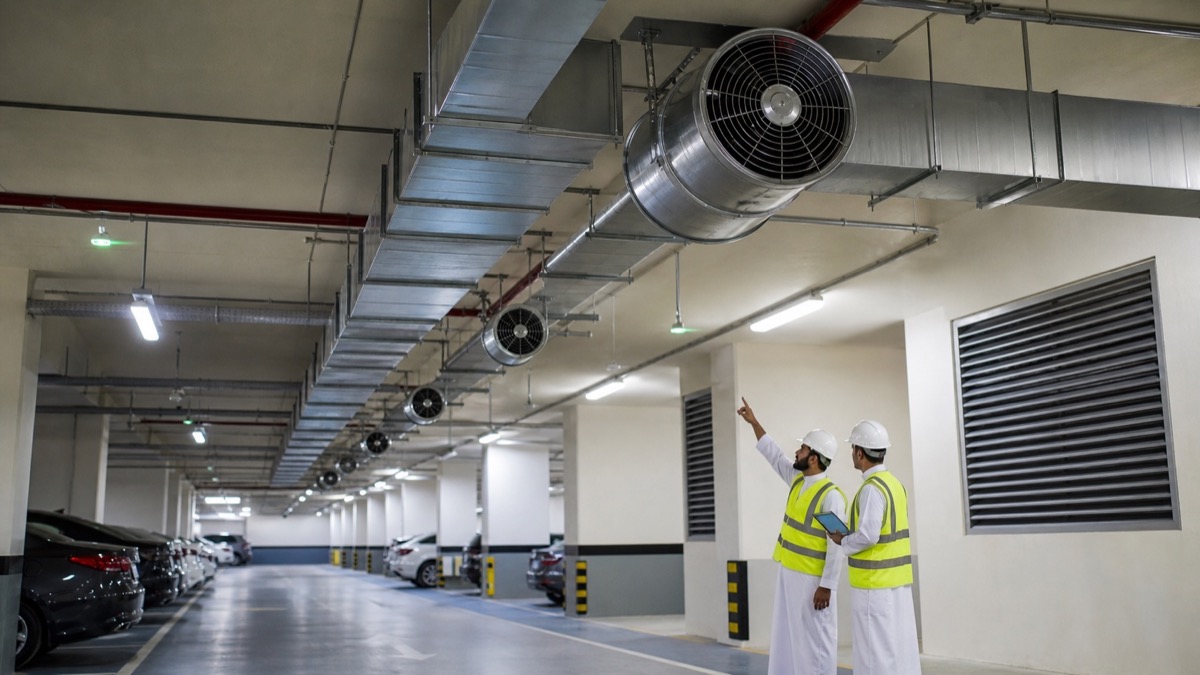
The first layer was daily exhaust. HTFC/DT cabinet centrifugal fans or SWF mixed-flow fans were arranged to serve the main exhaust system, removing vehicle exhaust, heat, and odor from key parking zones. Duct routes and exhaust points were planned according to the basement layout and expected airflow resistance.
The second layer was fire smoke exhaust. HTF-A axial fire smoke exhaust fans were assigned to the emergency smoke exhaust function. This layer needed to be coordinated with smoke zones, control logic, fire dampers, and make-up air paths according to the project design. The article does not assume a fixed quantity or airflow value because these must be calculated for the actual building.
The third layer was air organization and make-up air. PYD induction fans were placed in parking lanes or dead-zone areas to push air toward exhaust points. EG/SF axial fans or DWT roof fans could be used to support air supply or discharge depending on whether the project used wall openings, ramps, shafts, or roof-level exhaust outlets. Together, these devices helped create a clearer airflow path through the basement parking area.
Actual value for the underground parking project
The main value of this solution was that it separated daily ventilation, fire smoke exhaust, and air organization into different functional layers. This makes the system easier to understand and helps avoid treating every ventilation problem with one fan type.
The proposed layout supported the project in several ways:
- Daily exhaust helped remove vehicle exhaust, heat, and odor from the basement space
- HTF-A fire smoke exhaust fans supported emergency smoke extraction planning
- PYD induction fans helped reduce airflow dead zones in parking lanes and corners
- EG/SF axial fans and DWT roof fans provided make-up air or auxiliary exhaust options
- The system could be adjusted by zone according to parking layout and duct resistance
For underground parking, commercial building, and basement ventilation projects, POPULA can review parking layout, ramp position, ceiling height, exhaust shafts, make-up air paths, duct resistance, smoke zones, and local project requirements before recommending fan types. POPULA fan solutions can support daily exhaust, fire smoke exhaust, induction airflow, and make-up air planning for underground parking environments.