
Solutions
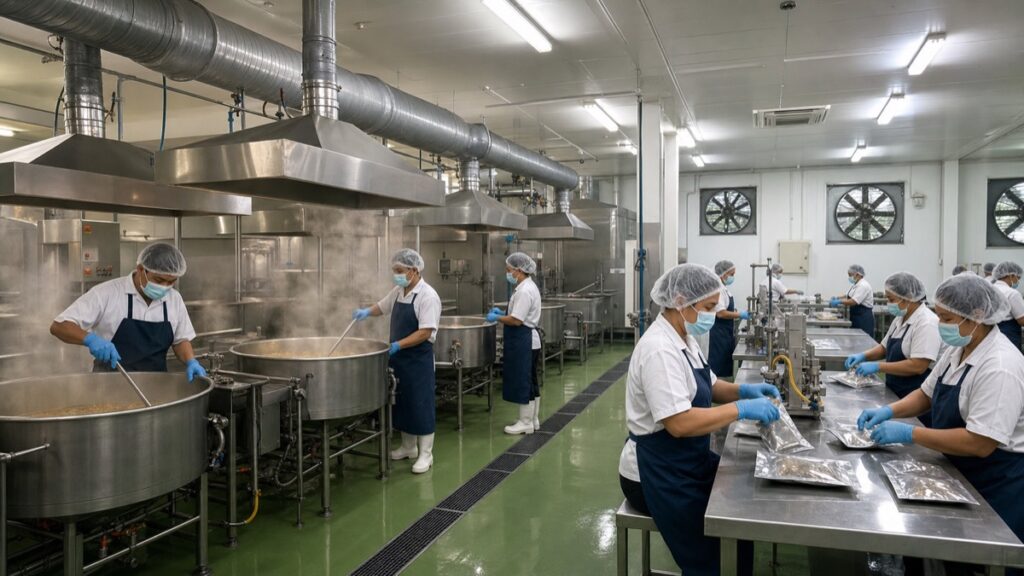
This Penang food processing workshop ventilation solution was designed for a food processing factory in Penang, Malaysia, where cooking, heating, cooling, and packaging areas operated in the same controlled workshop. The main problem was that wet hot air and light food odor from the cooking area could remain indoors and affect nearby work zones. POPULA proposed a three-layer ventilation layout using 9-19 or 9-26 high pressure centrifugal fans for source exhaust, EG axial fans for gentle air supply, and JS type exhaust fans or SF(G) wall fans for overall negative pressure.
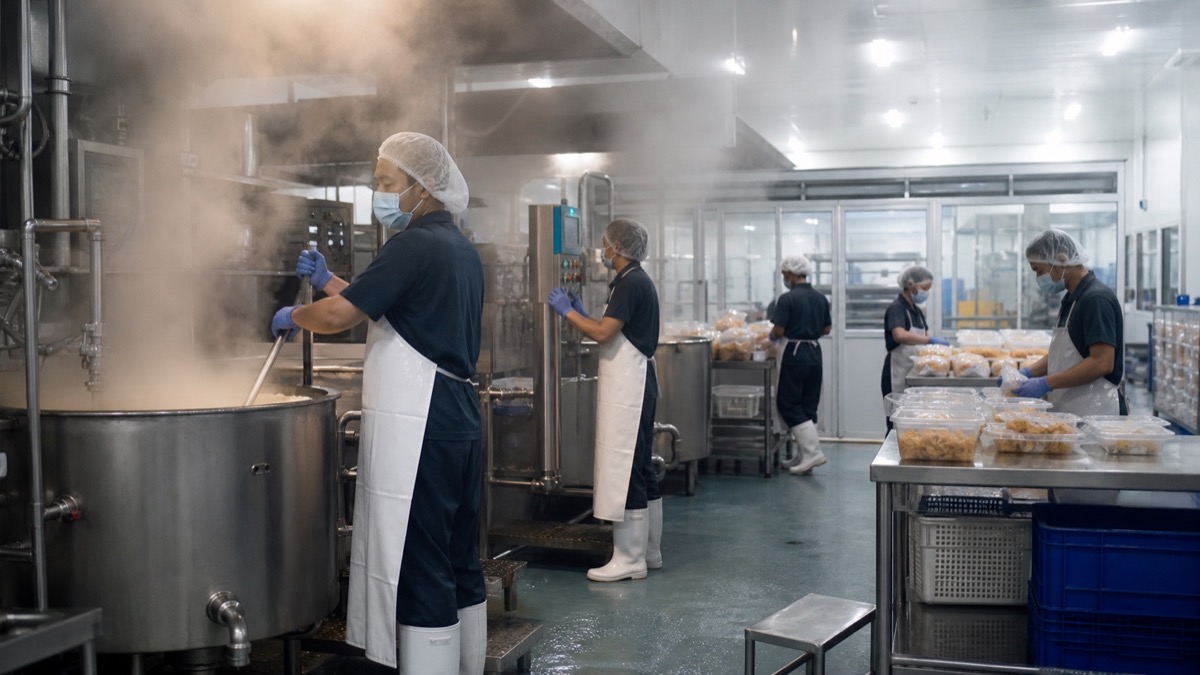
Penang food processing workshop ventilation solution application scenario
The project site was a medium-sized food processing workshop with stainless steel cooking equipment, heating tanks, cooling operations, and a packaging area. Because the factory needed to maintain a controlled processing environment, doors and windows could not remain open for simple natural ventilation.
During production, the cooking and heating area released steam, moisture, and warm air. If these were not removed close to the source, the air could spread toward workers and the packaging area. The packaging section also required careful airflow control because strong direct wind could disturb lightweight packaging materials and create unnecessary handling problems.
The ventilation design therefore needed to remove wet hot air from the source, provide comfortable but gentle air movement for the packaging side, and create a stable airflow direction across the workshop.
Why choose 9-19 or 9-26 centrifugal fans with EG and JS/SF(G) fans
For the cooking and heating area, 9-19 or 9-26 high pressure centrifugal fans were selected as the main source exhaust option. These fans are suitable when air needs to pass through hoods, ducts, elbows, and discharge paths. In a food processing workshop, this matters because wet hot air should be collected near the cooking equipment instead of being mixed through the whole room.
For the packaging area, EG axial fans were selected as the gentle air supply layer. The goal was not to blow directly onto food or packaging materials. Instead, the fans could be arranged from the side or a suitable distance to support air movement for workers while keeping the packaging process stable.
For overall workshop airflow, JS type exhaust fans or SF(G) wall fans were considered for negative pressure and general exhaust. Their role was to help pull air from the relatively cleaner packaging side toward the humid cooking side and then out of the workshop, reducing the possibility of odor or moisture returning to the packaging area.
How POPULA arranged the airflow layout and solved the problem
The first step was source capture. Exhaust hoods were planned above or beside the cooking and heating equipment, connected to 9-19 or 9-26 high pressure centrifugal fans through ductwork. This helped collect steam and wet hot air before it spread across the workshop.
The second step was controlled air supply. EG axial fans were positioned away from direct product handling points, with airflow directed toward worker zones and general movement paths rather than straight onto packaging materials. This provided a more comfortable working environment without disturbing lightweight bags, trays, or film packaging.
The third step was overall negative pressure. JS type exhaust fans or SF(G) wall fans were arranged on the exhaust side of the workshop to support directional airflow. The layout encouraged air to move from the packaging side toward the cooking and heating side, then leave through the exhaust system. This helped reduce wet air accumulation and food odor backflow.
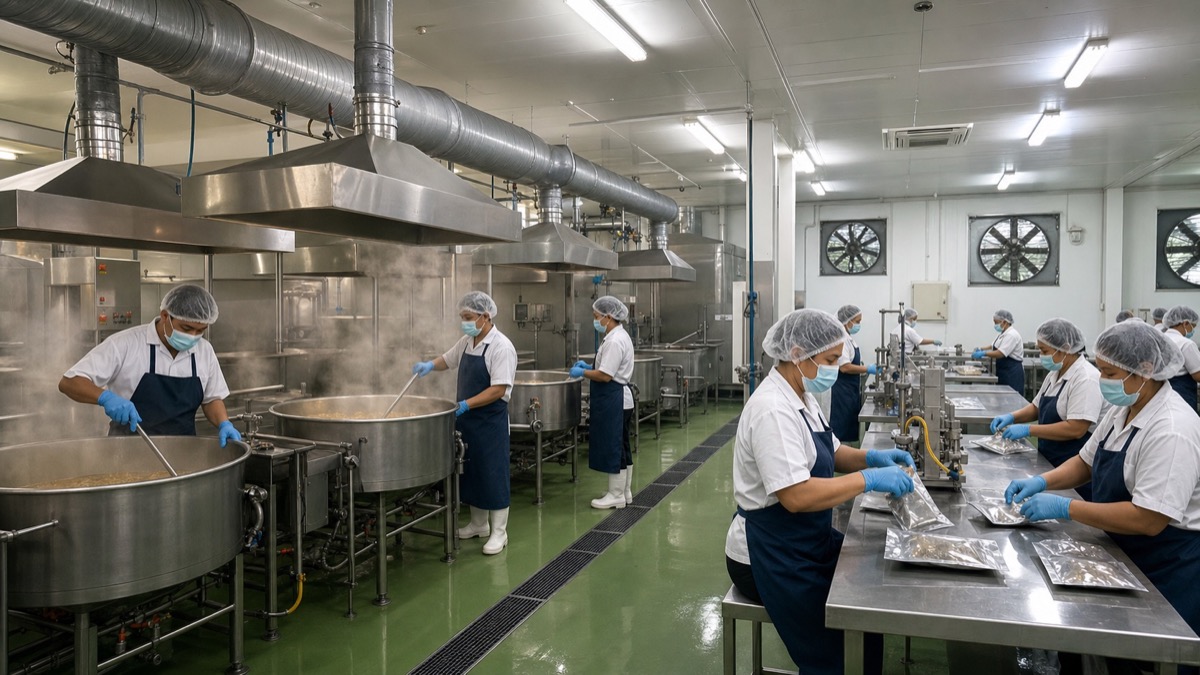
Actual value for the food processing workshop
The value of this solution was its separation of different airflow needs. The cooking area needed strong source exhaust, the packaging area needed gentle and stable air movement, and the whole workshop needed a clear exhaust direction. Treating these as separate layers made the ventilation plan more practical than using one fan type for every area.
The combined layout helped the workshop in several ways:
- Wet hot air was removed closer to the cooking and heating source
- Packaging areas avoided strong direct wind on lightweight materials
- Airflow direction reduced the risk of moisture and odor returning to cleaner areas
- Workers gained a more comfortable environment around heating and packing zones
- The solution could be adjusted by zone without rebuilding the whole workshop
For food processing, packaging, cooking, and heating workshops in humid regions, POPULA can review equipment position, hood location, duct length, wall opening conditions, packaging requirements, and power supply before recommending a fan layout. POPULA fan solutions can support source exhaust, gentle air supply, and overall negative pressure planning for controlled food processing environments.