
News
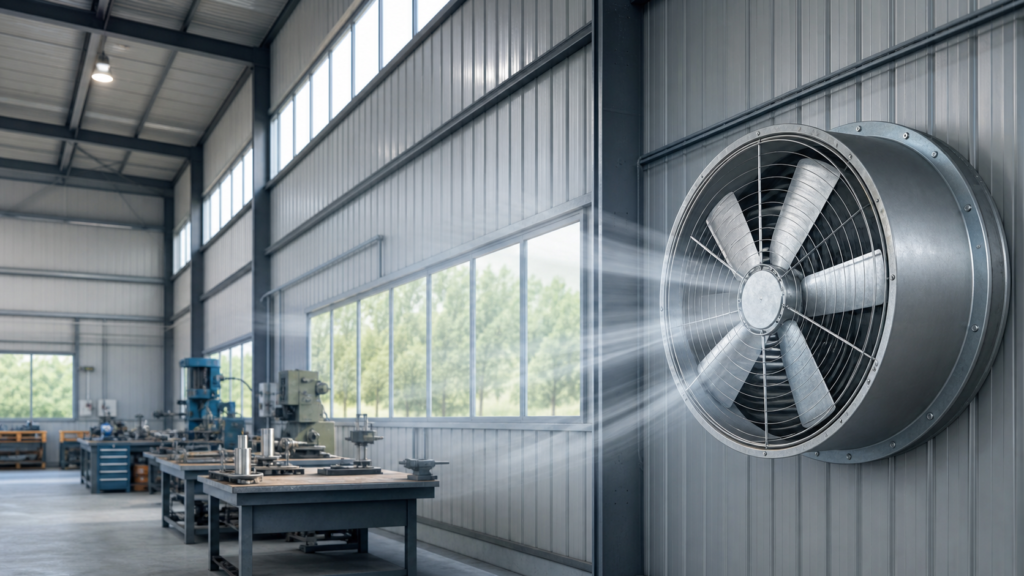
Industrial exhaust fan planning is one of the most practical ways to improve workshop air quality, reduce heat buildup, and maintain a more comfortable production environment.
Why workshop airflow needs a clear plan
Workshops, warehouses, and commercial spaces often generate heat, dust, moisture, odors, or process-related airborne particles throughout the day. When that air has no reliable path out of the building, it can affect comfort, visibility, equipment condition, and the overall feel of the workspace. A ventilation plan should begin with the sources of heat and contaminants, then follow the route air takes across each work zone.
Choose capacity for the real application
An industrial exhaust fan is most effective when its airflow capacity matches the size and use of the space. In applications with low resistance and a need for high-volume air exchange, axial fans are often a strong option. Facilities with long duct runs, filters, or higher pressure requirements may need a centrifugal solution instead. The selection should account for airflow volume, static pressure, mounting location, operating hours, and the environment around the fan.
Balance exhaust with make-up air
Removing indoor air is only half of the equation. Fresh replacement air needs a clear route back into the building through properly sized louvers, openings, doors, or dedicated make-up air systems. Without that path, excessive negative pressure can reduce performance and make equipment work harder than necessary. Coordinating intake and exhaust points helps create a more even, predictable airflow pattern.
Position equipment around the work zones
Fan placement matters as much as fan capacity. Equipment should support the natural movement of air away from occupied zones and toward an extraction point. In a larger workshop, several correctly positioned units may provide more consistent coverage than one oversized fan. Reviewing ceiling height, machinery layout, heat sources, and partitions before installation can prevent stagnant corners from becoming a long-term problem.
Build maintenance into the decision
A dependable industrial exhaust fan should also be easy to inspect and maintain. Corrosion resistance, motor protection, protective guards, shutter operation, and access for cleaning all influence long-term value. Routine checks of blades, guards, electrical connections, and mounting hardware can help preserve safe, efficient performance in demanding industrial conditions.
A simple next step for facility managers
Start with a short airflow review: map the working areas, identify heat and contaminant sources, note the current air entry points, and compare existing ventilation with production needs. This practical information makes it easier to choose equipment that supports a cleaner environment today and remains flexible as the facility evolves.
With the right layout and maintenance plan, an industrial exhaust fan becomes more than a piece of equipment. It becomes a dependable part of a healthier, more productive workspace.